Container CVE Triage: Local Scans, Three Buckets, and Explainable Policies
TL;DR
- Vulnerability Intelligence runs Trivy on your Mac via Desktop, enriches with NVD + CISA KEV + EPSS, and buckets every CVE into exploit priority / patch today / defer — each row includes a plain-English reason.
- On our own bases (June 2026 scans):
python:3.13-slimhas 46 unique CVEs and 0 patch-today rows underbalanced( 2 underpermissive_patches);node:20-slimhas 97 unique CVEs and 29 patch-today rows — same scanner, different nightly workload. - Built for security and platform teams who already have Trivy output and need shared rules across client images, not another dashboard that dumps CVSS-sorted noise.
Picture Monday after a base-image rebuild. Trivy finished overnight. The spreadsheet has 103 rows before anyone's had coffee. That's the moment this post is about — not picking Wiz over Snyk, but agreeing what actually patches tonight.
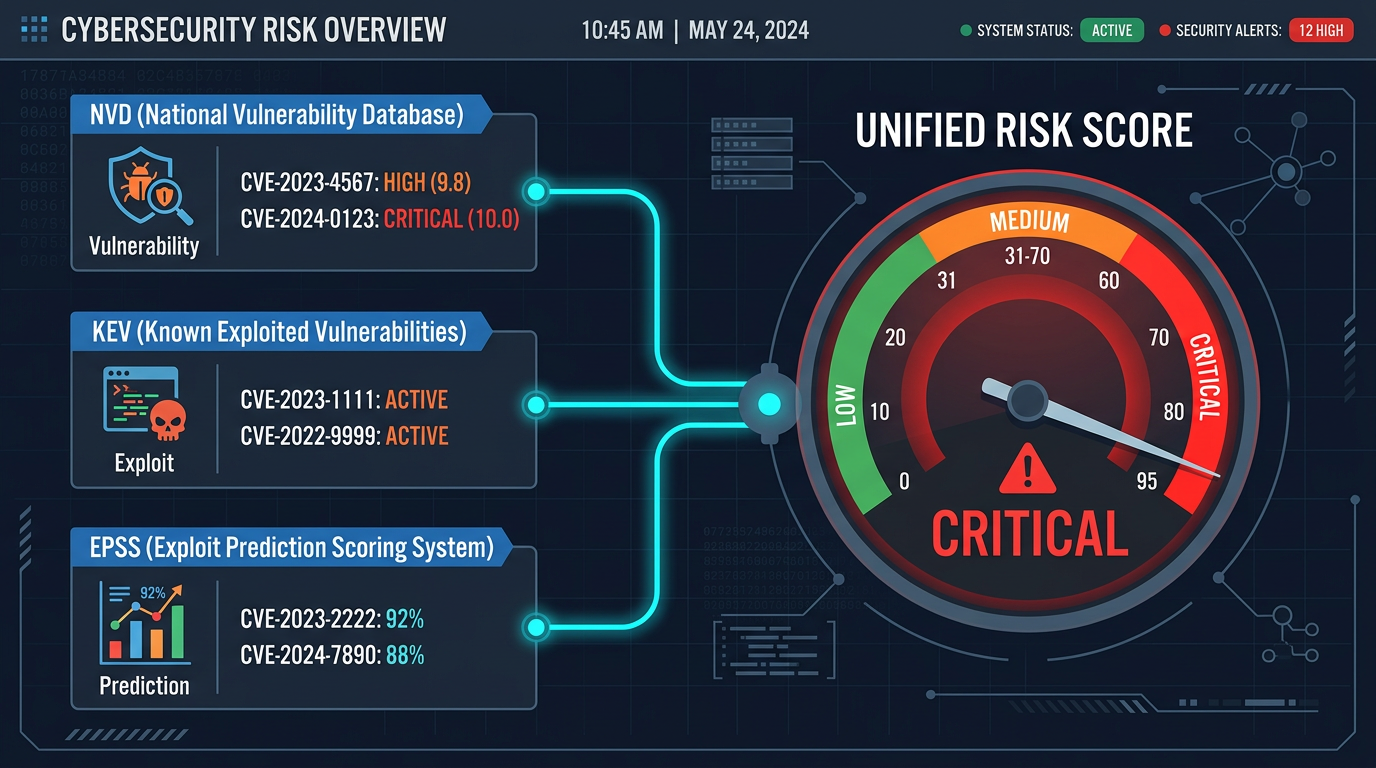
In April we open-sourced an MCP server that combines NIST NVD, CISA KEV, and EPSS into a composite risk score. That solved ranking — why a CVSS 5.0 in active ransomware campaigns should beat a CVSS 9.8 nobody is exploiting.
The next bottleneck is operations: your scanner still dumps hundreds of rows, and every team reinvents spreadsheet triage. Paste-JSON workflows do not scale when you run ten client images a week.
We shipped a hosted path that closes the loop: Desktop runs Trivy on your machine, the cloud enriches findings, and scan_triage buckets every CVE with a bucket_reason you can tune via policy presets.
Try Vulnerability Intelligence on MCPBundles — or keep reading for the bucketing rules and real numbers from our own Dockerfiles.